













The moment you notice a loved one struggling with memory or acting out of character, a quiet fear can take hold. It's natural to want to dismiss early signs of cognitive decline, hoping they're just a passing phase.
However, facing that fear and seeking clarity is one of the most courageous and loving actions a family can take. An early diagnosis for Alzheimer’s or another form of dementia is not about labeling a problem; it’s about unlocking a pathway to empowerment, control, and better care.
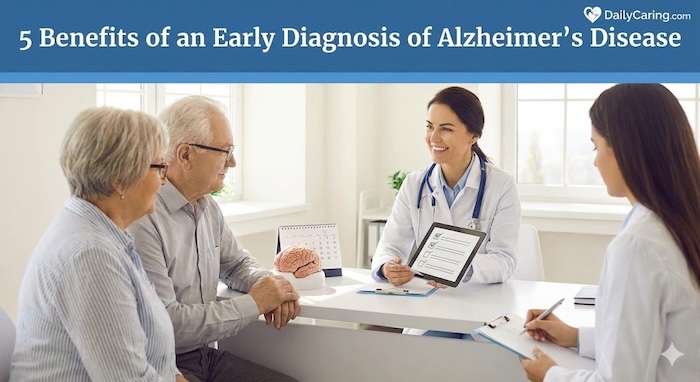
Understanding the specific benefits of early action can transform this daunting journey from one of anxiety into one of proactive planning and preserved quality of life.
What to Do if You Suspect Alzheimer’s Symptoms in a Loved One
If an older adult is behaving oddly or showing signs of cognitive impairment, like memory or judgment problems, you might wonder if they have Alzheimer’s disease or dementia.
It’s a scary thought, but it’s essential to face these fears head-on and have them get a thorough doctor’s exam and proper diagnosis.
If a loved one's dementia-like symptoms turn out to be caused by a treatable medical condition, seniors can get proper treatment and regain their lives faster.
If their symptoms are caused by Alzheimer’s or dementia, getting a specific diagnosis as early as possible gives everyone time to evaluate treatment options, plan for the future, and find support and resources.
We share five important reasons why a complete medical exam and proper diagnosis of their symptoms improve your older adult’s quality of life.
5 Benefits to an Early Diagnosis of Alzheimer's or Another Dementia Variant
1. It might not be Alzheimer’s at all
Signs of memory or cognitive issues don’t always mean someone has Alzheimer’s or dementia.
Many treatable health conditions cause dementia-like symptoms, like urinary tract infection (UTI), normal pressure hydrocephalus, hospital-induced delirium, or medication side effects.
If your older adult doesn’t see their doctor for a complete physical exam, they won’t know what’s causing their symptoms and won’t get the help they need.
2. Maximize benefits from available treatments
An early diagnosis of Alzheimer’s or detection of dementia means that treatment can begin right away.
Medications and lifestyle changes are often more effective in the early stages and can reduce or delay the onset of more severe symptoms.
3. Have time to plan for the future
Getting a specific diagnosis gives your older adult control over their own future.
Before their cognitive function becomes too impaired, they can make key decisions about their future care and finances, like choosing someone to be power of attorney and signing essential legal documents.
They’ll also be able to share their end-of-life wishes. That way, you and the rest of the family won’t have to guess, fret, or argue about what you think they would want when that time comes.
4. Pursue lifelong dreams before symptoms become too severe
With an early diagnosis of Alzheimer’s or dementia, older adults will still have time to work on their “bucket list” items, fulfilling lifelong dreams while they still can.
5. Get support and resources
When you don’t know what’s causing troubling behaviors and symptoms, it’s tough to find support and resources to deal with what’s happening.
With a specific diagnosis, you'll be able to find the information you need to understand and manage day-to-day challenges.
Final Thoughts on Diagnosing Alzheimer's Disease in the Early Stages
Choosing to pursue an early diagnosis for dementia is a profound step that places your family on a path of preparedness rather than panic. It’s a decision that champions your loved one’s autonomy, maximizes the effectiveness of available treatments, and provides the precious gift of time – time to plan, to dream, and to build a support network.
While the road ahead may have challenges, you no longer have to walk it in the dark. With knowledge as your guide, you can navigate the future with greater confidence, ensuring your loved one’s wishes are honored and their days are lived with the utmost dignity and care. This journey begins with a single, brave step: seeking answers today.
Recommended for you:
- 7 Treatable Health Conditions with Dementia-Like Symptoms
- SAGE Test: 15 Minute At-Home Test for Alzheimer’s
- The Mini Mental Status Exam: A Dementia Screening Tool
About the Author

Connie is the founder of DailyCaring.com and was a hands-on caregiver for her grandmother for 20 years. (Grandma made it to 101 years old!) She knows how challenging, overwhelming, and all-consuming caring for an older adult can be. She also understands the importance of support, especially in the form of practical solutions, valuable resources, and self-care tips.


I’m a 57 year-old male who suffered 2 major accidents, the first accident I was working for the Defense Dept. and broke my back, herniated 2 disc and dislocated my shoulder. I had back surgery (twice) but my pain became worse. While waiting for test results (I spent more time waiting for the Dept. of Labor to review and approve test and procedures it was painfully slow and depressing) Someone forgot that all I wanted to do was go back to work and live a normal life. I had a 3rd surgery in 2008 a two level spinal fusion. I did all the latest therapy but I lost feeling in my leg. I lost my balance and fell, suffered a TBI, 8 days in a coma, 63 in rehab learning to walk again. So my goal when I was injured at a young 30 years-old, my goal to return to work, I just bought a house and my second just turned 1, was totally changed. I didn’t quit. I went back to school and earned a degree in Computer Science and worked 15 more years before my injuries got the best of me. 57 and forget simple things, have trouble getting dressed some days and have trouble walking.. I’ll never play with my grandson like I want to. Never be able to jog. I guess my only option is live me life in serious pain. So I saw the Amazon Echo being used for reminders. maybe I’ll skip eating for a week and see if I can afford one, or maybe some mega-billion dollar company can help. A person should not feel this bad at 57.
Hi Nick, I’m so sorry to hear about all your serious health issues. Thank you for sharing your story. It sounds like you’ve been incredibly resilient and have overcome so much. Those are all huge accomplishments. I hope you can find a good doctor who can help relieve your symptoms. You could consult with a palliative care doctor, they’re experts on pain and symptom management and may be able to help. Here’s more info about them — https://dailycaring.com/palliative-care-improves-seniors-quality-of-life/
You may also benefit from talking with people who understand what you’ve been going through, to hear others’ stories, and to find out about helpful resources. Being able to share your story with others also relieves stress and any feelings of isolation. To find in person groups for TBI, check this site http://www.brainline.org/resources/index.php and call the local organizations to ask about their support groups. Online groups are also a great source of support. Here are a couple you may want to check out: https://www.facebook.com/Traumatic-Brain-Injury-Support-Group-180684948672011/ & https://www.facebook.com/groups/343140855818138/ (closed group, just request to join) & http://www.bcftbi.org/tbi-resources/support-groups.asp (other in-person and online resources).
I hope these resources are helpful.